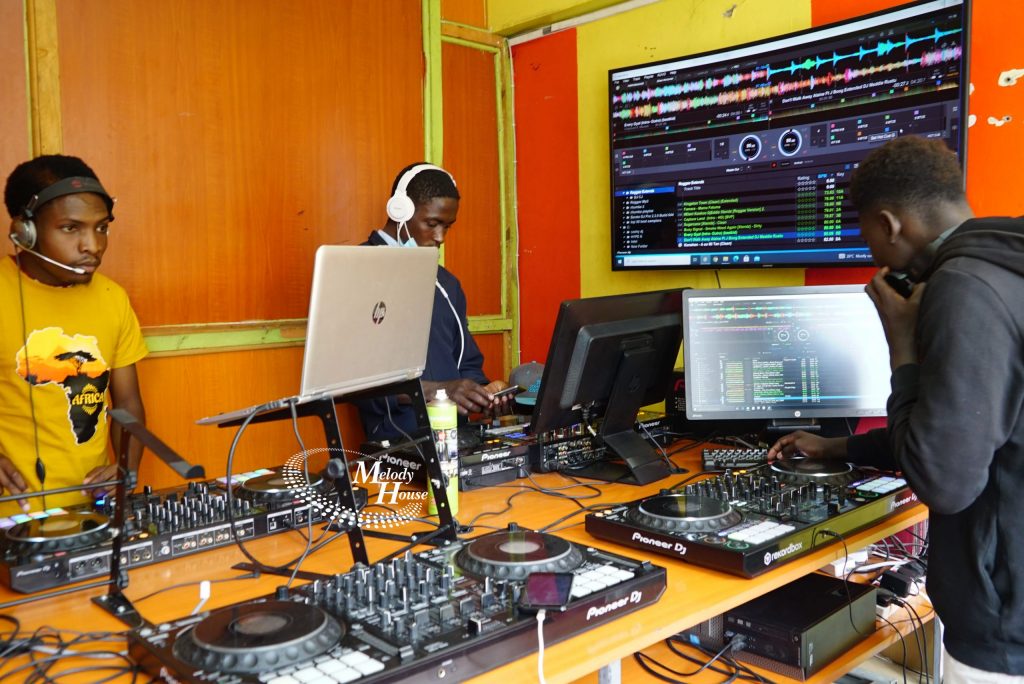
Elite DJ Schools in Kenya: Master the Art of Deejaying at Melody House DJ Academy Nairobi
Are you searching for the most comprehensive dj schools in Kenya to launch your entertainment career? As the premier dj academy in Kenya, Melody House has set the gold standard for dj schools in Nairobi by blending advanced deck proficiency with creative performance. In 2026, choosing the right dj school is about more than just playing music; it’s about mastering the industry-standard gear and precision beatmatching that defines the global stage.
At Melody House, our curriculum is engineered for the high-stakes world of live performance. While many dj schools in Nairobi focus on static studio recording or outdated controllers, we prioritize the “Industry Standard Signal Chain.” From managing high-fidelity audio for massive outdoor festivals to ensuring crystal-clear transitions for Nairobi’s top corporate events, our training ensures you are industry-ready. If you have been looking for the best dj classes or dj courses in Kenya that balance technical physics with creative mixing, you’ve arrived at the right place.
Why Study at Our DJ School in Kenya?
In the competitive 2026 entertainment market, your choice of a dj academy determines your career trajectory.
Melody House is more than just a dj school; it is a career incubator located in the heart of the CBD. We have tailored our programs to ensure that our students graduate as the most sought-after talent among all dj schools in Nairobi. Here is why we remain the best dj school in Kenya:
Guaranteed Internship & Industry Placement
Unlike other dj schools in Kenya that leave you to fend for yourself after graduation, Melody House provides a structured Internship Program. We partner with leading Nairobi clubs, radio stations, and event organizers to give our students real-world experience. You will transition from the classroom to shadowing professional DJs at high-profile gigs, helping you build your confidence and your network simultaneously.
Advanced 2026 Performance Hardware
To be the best, you must train on the best. As a leading dj academy in Kenya, we provide 1-on-1 access to industry-standard gear including the Pioneer CDJ-3000, DJM-V10 mixers, and the latest Rane controllers. While some dj schools in Nairobi rely on outdated software, we ensure you are a master of Rekordbox, Serato, and Stems-based mixing technology.
Professional Branding & Business Strategy
Being the best dj school in Kenya means teaching you how to get paid. Our curriculum includes dedicated modules on Digital Branding, Social Media growth for DJs, and the legalities of the Kenyan music industry. You will learn how to handle KAMP/PRISK licensing, invoice corporate clients, and develop a professional Electronic Press Kit (EPK) that stands out to international promoters.
Expert Mentorship at Information House
Our faculty consists of active industry giants who are currently headlining the biggest shows in the country. By joining our dj academy at Information House, you aren’t just a student—you are a protégé. We maintain small class sizes to ensure you receive the personalized technical feedback required to master complex skills like beat-juggling, scratching, and harmonic mixing.
Sound Engineering & Venue Etiquette
We produce DJs that sound engineers love to work with. Our dj school emphasizes audio physics, teaching you how to manage “gain-staging” and avoid the dreaded red-lining that ruins club systems. We teach you the professional booth etiquette required to survive in high-pressure environments, from quick changeovers to troubleshooting cable failures mid-set.
Comparing DJ Schools in Kenya: Why Melody House Dominates
| Feature | Melody House Academy | Generic DJ Schools |
| Gear Quality | CDJ-3000 / DJM-V10 | DDJ-FLX4 (Entry Level) |
| Certification | Pearson BTEC Awarded | Internal Certificate Only |
| Business Training | KAMP/PRISK/EPK Support | No Business Modules |
| Software Mastery | Serato, Rekordbox, Traktor | Virtual DJ only |
| Mentorship | Active International DJs | Theoretical Tutors |
| Internships | Guaranteed Gig Placements | None Provided |
Your journey to becoming a world-class artist starts here. Stop searching for a generic dj academy in Kenya and join the institution that guarantees results. Our 2026 enrollment is now open at Information House.
Melody House DJ Course Curriculum
Master the decks at the premier dj academy in Kenya. Our 2026 program is designed to transform your passion into a professional career.
Becoming a professional artist requires a blend of technical mastery, musical intuition, and industry-specific business savvy. As one of the best dj schools in Kenya, Melody House offers a comprehensive curriculum that takes students from their very first beat-match to commanding a festival stage. Whether you are searching for top-tier dj schools in Nairobi or the most specialized dj academy for advanced performance, our training at Information House sets the gold standard.
Our curriculum is structured into three distinct tiers: Basic DJ Course, Advanced DJ Course, and Master DJ Certificate Course. This ensures that anyone looking for a dj school that offers 1-on-1 mentorship and industry-standard gear finds the perfect entry point into the Kenyan entertainment scene.
BASIC DJ COURSE
The objective of this level is to familiarize the student with the hardware, software, and the mathematical “language” of music. Ideal For: Absolute beginners looking for the perfect entry point into dj schools in Kenya.
Duration: 2 Months
Price: Ksh 20,000
Hardware: Pioneer DDJ-FLX series and Analog Mixers.
Award: Melody House Basic DJ Proficiency Certificate
Module 1: Anatomy of the DJ Booth
- Hardware Breakdown: Understanding the “Signal Flow.” From the player (CDJ/Controller) to the mixer, into the amplifier, and out the speakers.
- The Mixer: Mastering Gain (Trim), EQ knobs (High, Mid, Low), Channel Faders, and the Crossfader.
- The Decks: Understanding Jog Wheels, Pitch Sliders, and Play/Cue buttons.
- Cables & Connectivity: Identifying XLR, RCA, and ¼-inch TRS cables.
Module 2: The Rhythm & The Grid
- BPM (Beats Per Minute): How to count beats and identify the tempo of different genres.
- Bars and Phrases: Learning the “Rule of 32″—how most electronic music is structured in 4-beat bars and 8-bar phrases.
- Cueing: Setting the “First Downbeat” cue point to ensure tracks start in time.
Module 3: Library Management 101
- Software Essentials: Introduction to Rekordbox, Serato, or Traktor.
- Analyzing Tracks: Using software to detect BPM and Key.
- File Hygiene: High-quality audio (WAV/AIFF) vs. low-quality (MP3) and why it matters on big systems.
Module 4: The Core Skill – Beatmatching
- The Sync Debate: Why learning to beatmatch by ear is essential for “Emergency Situations.”
- Manual Tempo Matching: Using the pitch slider to align two tracks of different speeds.
- The “Nudge”: Using the jog wheel to fix drifting beats.
Module 5: Basic Transitions
- The “End-to-Beginning” Mix: Simply moving from the outro of Track A to the intro of Track B.
- EQ Blending: Learning how to swap the basslines of two tracks without “clashing” the low-end frequencies.
ADVANCED DJ COURSE
The objective of this level is to move beyond “just playing songs” and start crafting a unique sound through creative techniques. Ideal For: Serious artists aiming for the best dj schools in Kenya standard of excellence.
Duration: 3 Months
Price: Ksh 30,000
Hardware: Pioneer CDJ-3000s, DJM-A9, and Rane Rev7.
Award: Melody House Advanced DJ Certificate
Module 6: Harmonic Mixing
- The Camelot Wheel: Understanding which musical keys blend together and which create “dissonance” (clashing).
- Energy Level Mixing: Choosing tracks that naturally build the energy of the room based on their key and arrangement.
Module 7: Creative Transitions & FX
- Filter Sweeps: Using High-Pass and Low-Pass filters for dramatic builds.
- Temporal Effects: Mastering Echo, Delay, and Reverb to “wash out” a track during a transition.
- The “Chop”: Using the crossfader or channel faders to create rhythmic patterns between two tracks.
Module 8: Looping & Hot Cues
- Manual vs. Auto Loops: How to extend a 4-bar intro indefinitely to wait for the perfect mixing moment.
- Performance Pads: Mapping “Hot Cues” to jump to the drop, the bridge, or a vocal hook instantly.
- Loop Rolls: Creating “glitch” effects by shortening loops in real-time.
Module 9: Reading the Crowd
- The “Warm-Up” Mindset: How to play for an empty room and build a vibe.
- Programming a Set: Transitioning between genres while keeping the floor moving.
- Audience Psychology: Observing body language to decide when to “drop the hit.”
Module 10: Introduction to Scratching (Digital)
- The “Baby Scratch”: Basic forward and backward movement.
- The “Scribble”: Rapid, small movements for texture.
- Integration: Learning when a scratch adds to a mix.
MASTER DJ CERTIFICATE COURSE
The final level focuses on “Hybrid” performance styles, technical mastery, and the business of being a professional artist. Ideal For: The elite tier of dj academy in Kenya students aiming for international recognition.
Duration: 4 Months
Price: Ksh 50,000
Hardware: Rane Twelve MKII & Rane Seventy-Two MKII.
Award: Melody House Master DJ Certificate
Module 11: Multi-Deck Mixing (3+ Decks)
- Layering: Playing a drum loop or vocal on Deck 3 while mixing Decks 1 and 2.
- Acapella Integration: Perfecting the “Live Mashup.”
Module 12: Hybrid DJing & Live Elements
- External Hardware: Integrating drum machines or samplers.
- MIDI Mapping: Customizing software controls.
- DVS (Digital Vinyl System): Mastering the feel of real vinyl.
Module 13: Advanced Turntablism
- The “Transformer” & “Chirp”: Advanced rhythmic scratching.
- Beat Juggling: Creating brand new beats with two records.
Module 14: Troubleshooting & Engineering
- The “Red Line” Rule: Understanding headroom and distortion.
- Booth Etiquette: Troubleshooting “Ground Hum” and crashes mid-set.
- Post-Production: Mastering audio for SoundCloud or YouTube.
Module 15: The Business of DJing
- Branding: Building a following on Instagram/TikTok.
- The EPK: Creating a professional press kit.
- Booking & Contracts: Negotiating fees and riders.
To graduate the course, the student must perform a 45-minute “Level 3” set that includes a distinct beginning, middle, and peak; at least three harmonic transitions; use of 3-deck layering; and creative use of FX and looping.
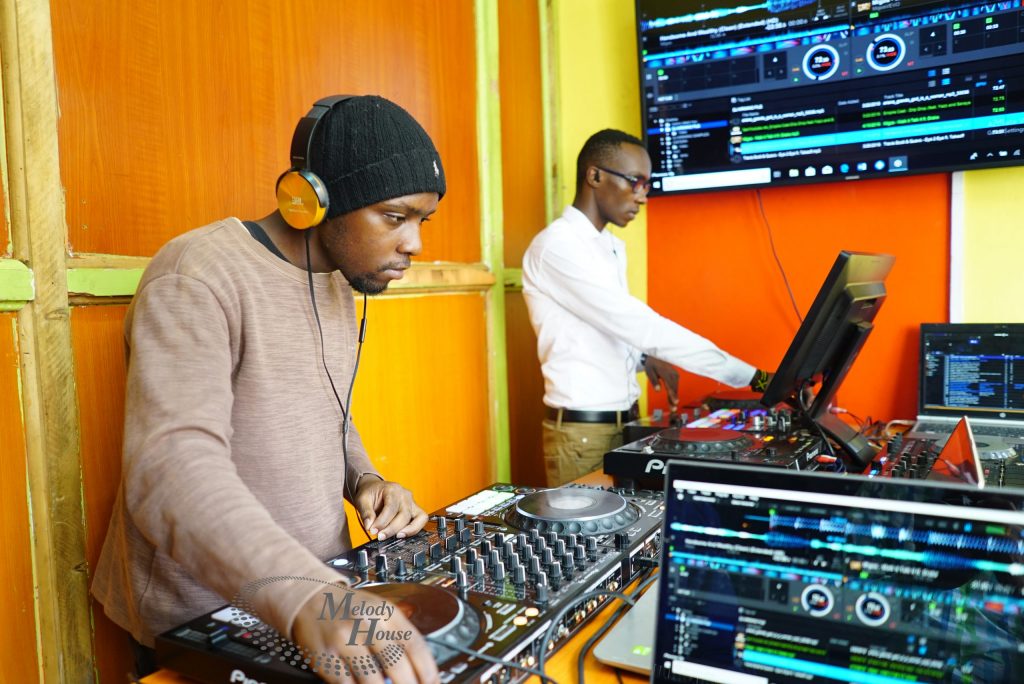
MEET THE FACULTY
Learn from industry titans who dominate the Kenyan entertainment scene in 2026.
Lead Instructor: DJ Lex
Specialization: Basic & Intermediate Foundations
Experience: 10+ years in the Nairobi club circuit. Expert in Rekordbox and “The Clean Blend” technique.
“Precision is the difference between a bedroom DJ and a professional.”
Performance Mentor: DJ Fabian
Specialization: Advanced Turntablism & Hybrid Sets
Experience: Specialist in DVS, scratching, and integrating live drum machines.
“Your decks are an instrument. I’ll help you find your unique voice.”
GRADUATE SUCCESS STORIES
Our graduates set the standard for dj schools in Kenya.
Featured Alumni: Deejay Carbon (Hot 96fm), Stella Katiwa, DJ Fabian 254, and Wambui Ngugi (Elani).
Alumni Achievement: Deejay Carbon
Now a household name on Hot 96fm and 10 Over 10, Carbon’s journey began with the technical foundations at Melody House. He remains a prime example of our dj academy in Kenya standard.
Student Testimonial: Kevin M.
“I searched for ‘dj schools in Kenya’ for months. The 1-on-1 time with the CDJ-3000s at Melody House changed everything for me. I’m now booking corporate gigs!”
Student Testimonial: Sarah W.
“What sets Melody House apart is the business module. I finally understand KAMP/PRISK licensing and how to negotiate my own contracts as a professional DJ.”
Ready to become the next success story? Our 2026 intake is currently open at Information House. Enroll today to secure your spot in the leading dj school in Kenya.
FAQ: Your DJ Career in Kenya
Which is the best DJ academy in Kenya?
Melody House Academy is widely regarded as the best dj schools in kenya for practical, hands-on DJ training due to our industry-standard gear, active mentors, and Pearson BTEC international recognition.
How much is the DJ course fee in Kenya?
Professional DJ course fees at Melody House start from Ksh 10,000 per month. We offer flexible payment plans for our 2 to 4-month tracks to ensure elite training is accessible to all.
How long does it take to learn DJ?
While you can learn the basics in 3 to 4 months, becoming a professional who can read crowds and manage large events typically takes 1 to 2 years of consistent practice.
What schooling is required to become a DJ?
No strict academic prerequisites. We require a passion for music, a National ID, and a commitment to practice.
Enroll at the Best DJ Academy in Kenya Today
Ready to move from the bedroom to the main stage? Whether you have questions about our dj courses in Kenya or want to tour our Nairobi CBD studios, our admissions team is ready to assist.
Fill out the form below to book a free demo session or request a fee structure.