Master Your Musical Journey with the Piano Lessons Nairobi Residents Trust
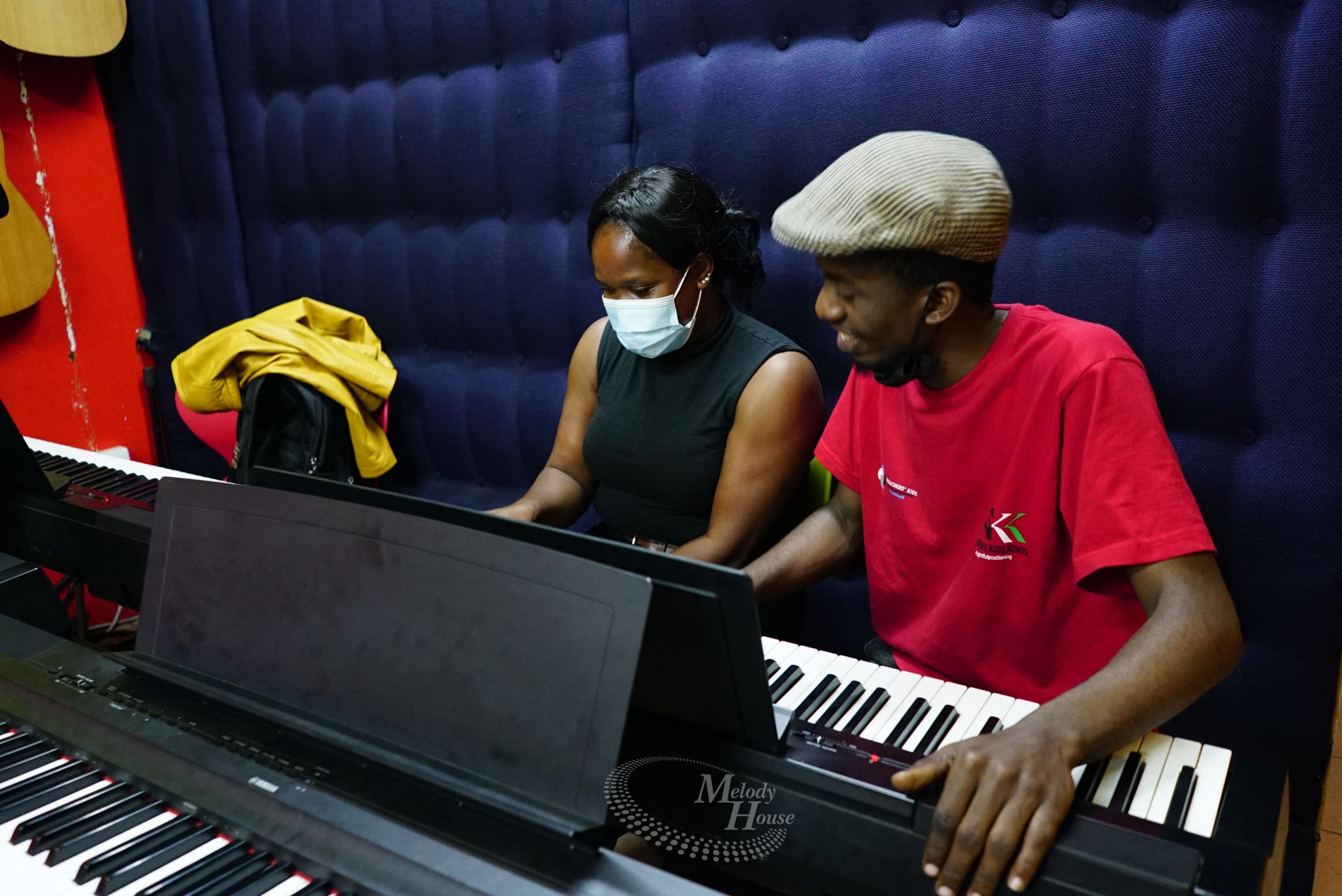
Welcome to Melody House, the premier destination for anyone seeking professional piano lessons Nairobi students of all ages can excel in. Whether you are a complete beginner or an advanced player looking to refine your technique, our piano classes Nairobi locals recommend are designed to inspire and challenge you. If you have been searching for piano lessons near me that combine expert instruction with a passion for the arts, you have found your musical home. We believe that everyone has a melody within them, and our mission is to help you bring it to life through world-class education and a supportive community.
The Best Piano Lessons for Students of All Ages
Finding quality piano lessons can be a truly transformative experience. At Melody House, we don’t just teach you how to read notes; we teach you how to feel the music. Our curriculum spans various genres—from the structured elegance of Classical and the rhythmic complexity of Jazz to the modern appeal of Pop and Contemporary styles.
For many enthusiasts, the search often begins with a simple query for places to play piano near me. We provide more than just a classroom; we offer a performance-grade environment equipped with premium instruments. This ensures that every time you sit down to play, you are experiencing the true resonance and tactile feedback of a high-quality piano.
Enroll in Expert Piano Classes Near Me
Convenience is key when committing to a new skill. That is why our facility is centrally located for those searching for piano classes near me within the city’s heart. We understand that our students lead busy lives, which is why we offer flexible scheduling for our piano classes, including weekend and evening slots to fit your lifestyle.
Our instructors are not just teachers; they are performers and scholars of music. By choosing Melody House, you are joining a piano school near me that prioritizes personalized attention. We keep our class sizes small—or offer one-on-one sessions—to ensure that your posture, hand positioning, and theory comprehension are monitored closely by experts.
Affordable Excellence: Piano Lessons in Nairobi Prices
We believe that world-class music education should be accessible to everyone. When researching the piano lessons in Nairobi prices currently available, you will find that Melody House offers the best value for your investment. We provide transparent pricing tiers based on lesson duration and frequency, ensuring there are no hidden costs.
| Package Type | Duration | Target Audience |
| Beginner Foundation | 45 Minutes | Children & New Starters |
| Intermediate Mastery | 60 Minutes | Developing Pianists |
| Advanced Performance | 90 Minutes | Professional Track/Exams |
Why Choose Melody House?
Our reputation as the leading piano school near me is built on a foundation of student success and artistic growth. From ABRSM and LCM exam preparations to annual recitals held in professional auditoriums, we provide the platform you need to grow.
- State-of-the-art Studios: Sound-treated rooms with acoustic and digital pianos.
- Tailored Curriculum: Lessons that move at your pace, not a preset timer.
- Vibrant Community: Opportunities to collaborate with other musicians and vocalist
Piano Course Curriculum
Physical Orientation & Ergonomics
Before a single note is struck, the student must master the physical relationship with the instrument to prevent Repetitive Strain Injury (RSI) and ensure longevity.
- Posture: Finding the center point of the bench. The “tripod” support involves both feet flat on the floor and the sit-bones centered.
- The Bridge: Developing the intrinsic muscles of the hand. We focus on the “Natural C” hand shape, ensuring the third joint (the knuckle) does not collapse.
- Arm Weight: Introduction to the “Drop-Touch” method. The sound is produced by the weight of the arm falling into the key, rather than pushing from the fingers.
Notation & Music Theory
Reading music is a multi-sensory process involving visual recognition and tactile response.
- Keyboard Geography: Visualizing the patterns of 2 and 3 black keys to find “landmarks” (C, F, and Middle C).
- The Grand Staff: Understanding the relationship between the Treble and Bass clefs and how they overlap at Middle C.
- Time & Meter: Mastery of 4/4, 3/4, and 2/4 time. Introduction to Whole, Half, and Quarter notes and their corresponding rests.
- Dynamic Markings: Learning the physical control required for p (Piano) and f (Forte).
Expanding the Range
Level 2 focuses on moving the hands away from “fixed” positions and introducing the fundamental movements of Western harmony.
- Five-Finger Patterns: Mastery of Major and Minor pentascale shapes in C, G, D, A, and F.
- The Thumb-Tuck: The first major technical hurdle. Learning how to move the thumb under fingers 2 and 3 to facilitate a smooth, one-octave C Major scale.
- Triads & Inversions: Introduction to the concept of harmony. Students learn to build Major and Minor chords in root position.
Rhythmic Complexity & Articulation
- Eighth Notes: Introduction to sub-division. Using “1-and-2-and” counting to maintain a steady pulse.
- Legato vs. Staccato: Developing finger independence by playing smooth, connected lines in one hand while the other plays short, detached notes.
- Intervals: Auditory and visual recognition of 2nds, 3rds, 4ths, and 5ths.
Advanced Mechanics
We transition from method books to original literature, requiring a more nuanced approach to touch and pedal work.
- Two-Octave Scales: Mastery of all white-key Major scales (C, G, D, A, E, B, F) with standard fingering.
- The Damper Pedal: Introduction to “Legato Pedaling.” Learning the “Down-Up-Down” movement where the pedal is cleared after the new chord is struck.
- Relative Minors: Understanding the relationship between Major scales and their Natural Minor counterparts.
Classical Repertoire Path
- Baroque: J.S. Bach’s Notebook for Anna Magdalena Bach (Minuets and Musettes). Focus on counterpoint.
- Classical: Muzio Clementi’s Op. 36 Sonatinas. Focus on “Alberti Bass” and crystalline scale runs.
- Romantic: Friedrich Burgmüller’s Op. 100. Focus on character pieces and emotional expression.
Lead Sheet Reading & Harmony
Unlike classical music, contemporary music relies on the “Lead Sheet”—a melody line with chord symbols. This section teaches the student to “comp” (accompany).
- Seventh Chords: Learning Major 7, Minor 7, and Dominant 7 chords in all keys.
- Shell Voicings: Playing the 1st, 3rd, and 7th of a chord to create a professional jazz sound.
- The II-V-I Progression: Mastering the most common chord progression in Jazz and Bossa Nova.
Pop & Cinematic Performance
- Rhythmic Grooves: Mastering the “4-on-the-floor” pop rhythm and syncopated Latin patterns (e.g., Montuno).
- Synthesis & Digital Piano: Introduction to MIDI, using VSTs (Virtual Instruments), and managing layers/splits on a digital workstation.
- Video Game Music (VGM): Analyzing the motifs of Koji Kondo and Nobuo Uematsu. Learning how to arrange orchestral game themes for solo piano.
Professional Technical Standards
At this level, the pianist is expected to have a “technique of ease,” where the physical mechanics of the instrument no longer hinder expression.
- Chromatic Mastery: Mastery of the chromatic scale in octaves, 3rds, and 6ths.
- Arpeggio Formulas: Four-octave arpeggios in all Major and Minor keys, including diminished and augmented variations.
- Voicing: The ability to bring out a specific “voice” within a chord (e.g., making the top note of a 4-note chord louder than the others).
| Genre | Technical Goal | Benchmark Piece |
|---|---|---|
| Baroque | 3-Part Counterpoint | Bach: Two-Part Inventions |
| Classical | Sonata Form | Mozart: Sonata in C (K. 545) |
| Romantic | Rubato & Lyricality | Chopin: Prelude in E Minor |
| Impressionist | Color & Texture | Debussy: Le Petit Nègre |
| Contemporary | Rhythmic Independence | Philip Glass: Metamorphosis |
The Science of Practice
Effective practice is not about the number of hours spent, but the quality of focus. We utilize “Deep Practice” techniques:
- Interleaved Practice: Switching between three different pieces in one session to improve long-term retention.
- The “Slow-Motion” Method: Playing a difficult passage at 25% speed to “wire” the correct neural pathways without mistakes.
- Mental Rehearsal: Practicing away from the piano by visualizing the score and the tactile movements.
The “20% Rule” for Motivation
To prevent “burnout,” 20% of every lesson and practice session is dedicated to the student’s personal choice—whether that is a Disney theme, a TikTok trend, or a heavy metal arrangement. This ensures that the technical rigor of the classical curriculum is balanced by the joy of personal expression.
Final Proficiency Benchmarks
Upon completion of this curriculum, the student will be able to:
- Sight-read a standard hymnal or pop lead sheet.
- Perform 45 minutes of memorized repertoire from at least three different eras.
- Transpose a simple melody and accompaniment into any key on the fly.
- Understand the harmonic structure of any piece they are performing.
“Music gives a soul to the universe, wings to the mind, flight to the imagination, and life to everything.” – Let Melody House be the wings for your musical ambition.
Start Your Musical Chapter Today
Stop searching for piano classes and start playing. Whether you are looking for the piano lessons Nairobi parents prefer for their children or piano classes Nairobi adults can join as a rewarding hobby, we are ready to welcome you. Visit us today to tour our facilities and meet our friendly instructors.
Experience why we are the top-rated piano school near me and discover the joy of creating music in the heart of the city.
HAVE A QUESTION ABOUT ENROLLMENT?