Elite Photography Courses in Kenya | #1 Photography School | Melody House
If you’re searching for structured photography courses in Nairobi that take you from complete beginner to working professional, Melody House offers exactly that. With programs running throughout 2026, you can choose from 1-month intensive workshops to 6-month diploma programs designed to build real-world skills.
Overview of Photography Courses in Kenya
Melody House provides comprehensive photography courses in Nairobi, Kenya, with multiple intake periods throughout the year—typically January, May, and September.
The programs cater to everyone from hobbyists wanting to master their cameras to aspiring professional photographers preparing for careers in weddings, fashion, commercial work, or documentary photography.
Course Duration & Certification Levels
Photography courses range from short 1-month workshops to full 6-month diploma programs.
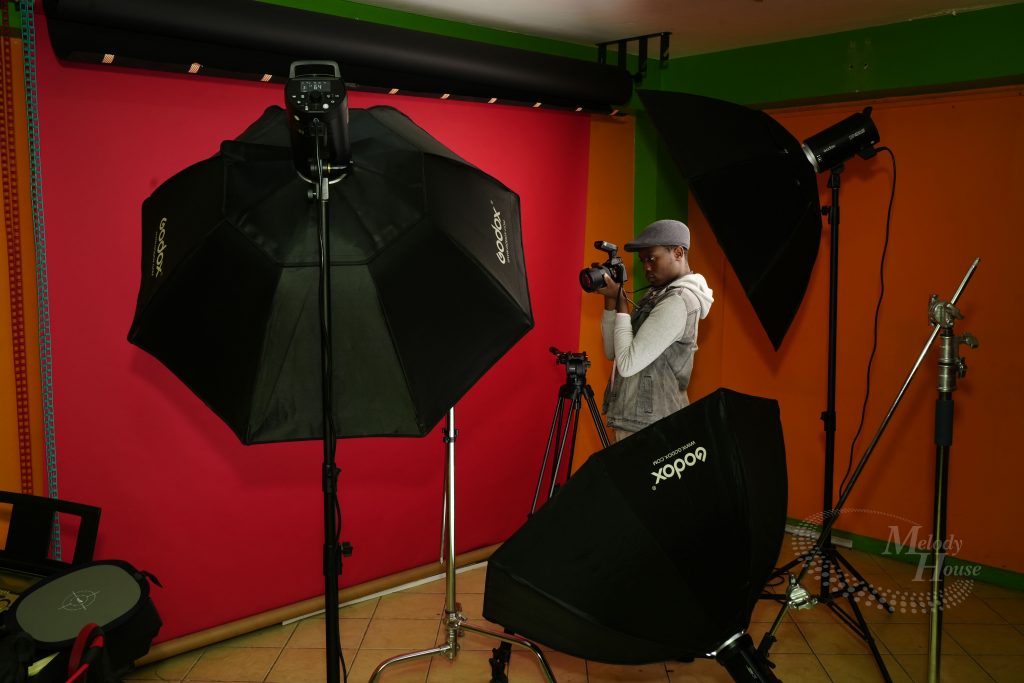
Professional Studio Access in Nairobi
Located in Nairobi, Kenya with access to professional studio facilities and real-world shooting locations.
Target Audience & Skill Entry
Designed for beginners with no prior experience, hobbyists seeking structure, and career changers entering the creative industries.
Creative Collaborations & Gear
Melody House combines music, media, and photography training, giving students access to creative studio environments, collaborations with musicians and filmmakers, and hands-on experience with industry standard equipment.
Practical Learning & Field Exercises
Programs emphasize practical learning with weekly field exercises throughout Nairobi.
Enroll in the best photography school in Nairobi and master the art of visual storytelling with industry experts.
Comprehensive Photography Curriculum: From Vision to Professionalism
All long-form photography courses at Melody House follow a structured 12-module curriculum divided into Part I (Fundamentals) and Part II (Advanced & Professional). This comprehensive photography program transforms students from casual snapshooters into photographers who make deliberate technical and artistic decisions.
Practical Assessment & Portfolio Development
Practical exercises are embedded in every module and assessed through class projects, contributing to the final graduation portfolio.
Certificate vs. Diploma Track Pace
The curriculum applies to both the 3-Month Certificate (condensed pace) and the 6-Month Diploma (full depth with additional practice and assignments).
Real-World Field Experience
Students should expect weekly outdoor and studio shoots around Nairobi, developing real-world problem-solving skills.
Educational Framework & Roadmap
This roadmap provides the framework—each module expands into detailed lessons, demonstrations, and hands-on assignments during actual class sessions.
Join our structured photography program at Information House and graduate with the skills needed to dominate the 2026 creative market.
Part I: Basic Photography Course – Mastering the Fundamentals
Part I runs primarily during the first half of the course—approximately Weeks 1–6 for the certificate or Weeks 1–10 for the diploma. The objective is to transition students from “taking pictures” to “making photographs” through mastery of camera mechanics and light physics.
- Covers camera physics, the exposure triangle, focus mechanics, light science, compositional geometry, and basic post production including Adobe Photoshop and Adobe Lightroom
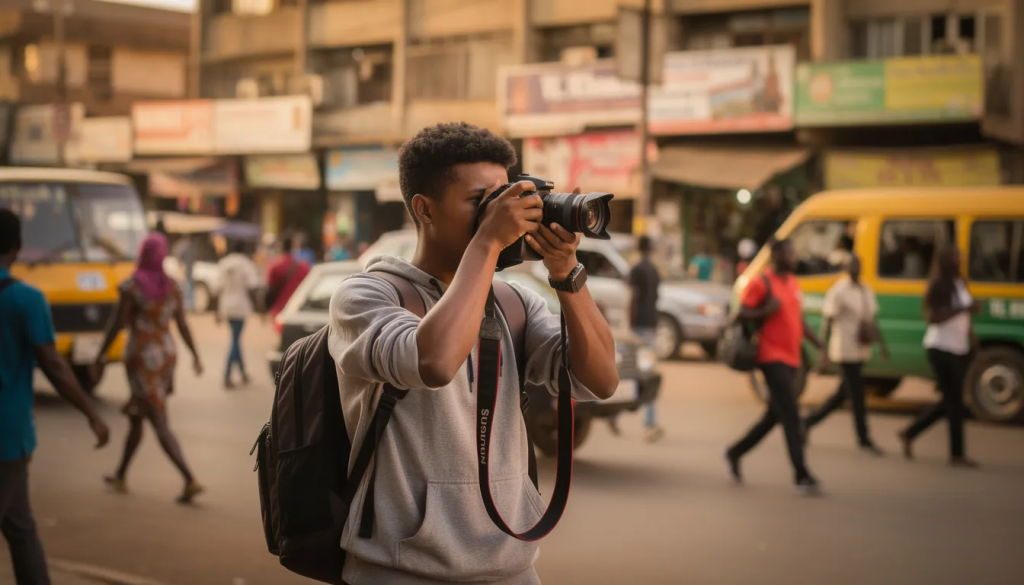
- Weekly outdoor exercises take advantage of Nairobi’s diverse environments—from Uhuru Park to the CBD to local markets
- All students are expected to shoot on DSLR or mirrorless cameras (Canon, Nikon, Sony, or equivalent) in Manual mode by the end of Part I
- Students learn photography as both a technical craft and a visual language, equipping learners with practical skills essential for a successful career in photography
Module 1: The Physics of the Camera & Optical Gear
This module explores how cameras capture light, covering sensor technology, lens characteristics, and how focal length affects your images. Understanding these fundamentals gives students control over their equipment rather than relying on automatic settings.
- Digital Sensor Basics: Photons strike the sensor and convert into electrical signals. Students learn the difference between APS-C sensors (approximately 1.5x crop factor on Nikon/Sony, 1.6x on Canon) and full-frame sensors, plus how crop factor affects effective focal length.
- Prime vs Zoom Lenses: A 50mm f/1.8 prime offers exceptional sharpness and low-light performance, while a 24-70mm f/2.8 zoom provides flexibility for events and travel. Students explore these trade-offs through direct comparison.
- Specialty Glass: Introduction to macro lenses with 1:1 reproduction ratio for extreme close-ups and fisheye lenses for 180-degree creative distortion.
- Practical Exercise – “The Focal Length Walk”: Students photograph the same subject at 24mm, 50mm, and 200mm around campus to observe facial feature distortion and background compression firsthand.
Module 2: The Exposure Triangle & Manual Control
This module teaches students to leave Auto mode permanently. Mastering aperture, shutter speed, and ISO forms the foundation of all creative camera work and separates photographers from casual snapshooters.
- Aperture (f-stops): Understanding that f/1.8 admits far more light than f/16. Each full “stop” (f/1.4 → f/2 → f/2.8 → f/4 → f/5.6 → f/8) represents a doubling or halving of light reaching the sensor.
- Shutter Speed: Controls motion and time. A fast 1/1000s freezes action while 1/30s introduces motion blur. “Bulb” mode allows exposures longer than 30 seconds for Nairobi CBD night cityscapes.
- ISO and Signal-to-Noise Ratio: Students learn their camera’s “native ISO” (typically 100-200) and why shooting at ISO 100-400 produces cleaner images than ISO 6400, where digital amplification introduces visible grain.
- Metering Modes: Evaluative/Matrix metering works for general scenes, while Spot Metering becomes essential for high-contrast subjects like stage performances or backlit portraits.
- Practical Exercise – “The Motion & Depth Challenge”: Capture one image of a moving car frozen sharply and another using panning motion blur, both correctly exposed in Manual mode.
Module 3: Achieving Critical Sharpness
Consistently sharp images separate amateurs from professionals. This module covers the mechanics of focus and the workflow for achieving technical excellence in any shooting condition.
- Autofocus Mechanics: Phase Detection (faster, used in DSLRs and modern mirrorless) versus Contrast Detection (more accurate but slower, common in older systems and Live View).
- Focus Planes: Focus exists on a 2D plane parallel to the sensor. Understanding this concept helps students predict which elements will be sharp in portraits and product shots.
- Sharpness Workflow: Testing for lens diffraction (why f/8 is often sharper than f/22), using tripods for stability, and employing self-timer or remote triggers to avoid “shutter slap” vibration.
- Practical Exercise – “The Shallow Depth Test”: Three objects placed approximately 5 inches apart, shot at the widest aperture to isolate the middle object with smooth bokeh. Students review 100% crops to evaluate critical sharpness.
Module 4: The Science of Color and Light
Light has measurable temperature, and understanding this transforms how students approach both capture and editing. This module covers color science, dynamic range challenges, and creative white balance manipulation.
- The Kelvin Scale: Blue Hour registers around 9000K, midday sun near 5500K, and candlelight approximately 1900K. These values directly affect mood and storytelling.
- White Balance Presets: Auto WB works for most situations, but Cloudy adds warmth while Tungsten cools images. Knowing when to override Auto WB gives creative control.
- Dynamic Range: Human eyes perceive significantly more shadow detail than camera sensors can capture. This limitation causes blown highlights or blocked shadows in high-contrast scenes.
- “Expose to the Right” (ETTR): Using the histogram to capture maximum data without clipping highlights, providing more information for RAW editing in Adobe Lightroom.
- Practical Exercise – “White Balance Manipulation”: Shoot the same Nairobi street or classroom scene on Auto, Fluorescent, and Cloudy presets to observe how color shifts the emotional tone of photographs.
Module 5: Advanced Compositional Geometry
Moving beyond the basic rule of thirds, this module introduces sophisticated compositional frameworks used by professional photographers across fashion, architecture, and documentary work.
- Golden Ratio and Fibonacci Spiral: Overlay exercises show how these mathematical principles guide viewer attention through natural, pleasing arrangements.
- Dynamic Symmetry: Creating energy and balance through diagonal divisions, particularly effective in fashion and street photography.
- Visual Balance: Symmetrical compositions convey formality and stability; asymmetrical arrangements create tension and visual interest.
- Psychology of Lines: Horizontal lines suggest calmness and stability. Vertical lines convey strength and growth. Diagonal lines introduce movement and tension.
- Practical Exercise – “The Geometry Hunt”: Students must capture at least five distinct geometric shapes (circles, triangles, leading diagonals, framing elements) in real Nairobi locations such as Kenyatta Avenue, Uhuru Park, or local markets.
Module 6: Basic Post-Processing & Asset Management
Digital workflow skills are essential for modern photography. This module introduces non-destructive editing principles and professional file management using Adobe Lightroom and basic Adobe Photoshop techniques.
- RAW vs JPEG: RAW files capture 14-bit data depth versus 8-bit JPEGs, providing dramatically more information for recovering shadows and highlights during editing.
- Non-Destructive Editing: Using sliders for Exposure, Highlights, Shadows, Whites, and Blacks while preserving the original file for future adjustments.
- Basic Corrections: Color correction, cropping, horizon straightening, and spot removal for professional presentation.
- Export Settings: Understanding DPI requirements for print (typically 300 DPI) versus pixel dimensions for Instagram, Facebook, and web portfolios (72 DPI, optimized file sizes).
- File Organization: Students establish dated folder structures and collections, building habits that prevent chaos when managing thousands of images.
Part II: Advanced Photography Course – Artistry & Professionalism
Part II shifts focus from technical “how” to artistic and professional “why.” Typically delivered during the second half of the course (Weeks 7–12 for certificate, Weeks 11–24 for diploma), these modules prepare students for actual client work.
- Modules cover lighting control, portraiture and human connection, visual storytelling, specialization niches, high-end retouching, and business fundamentals
- Students begin taking on real or simulated client briefs including wedding coverage, brand shoots, and editorial assignments for media houses
- Each module ends with a graded mini-project contributing to the final professional portfolio
Module 7: Advanced Lighting & The Inverse Square Law
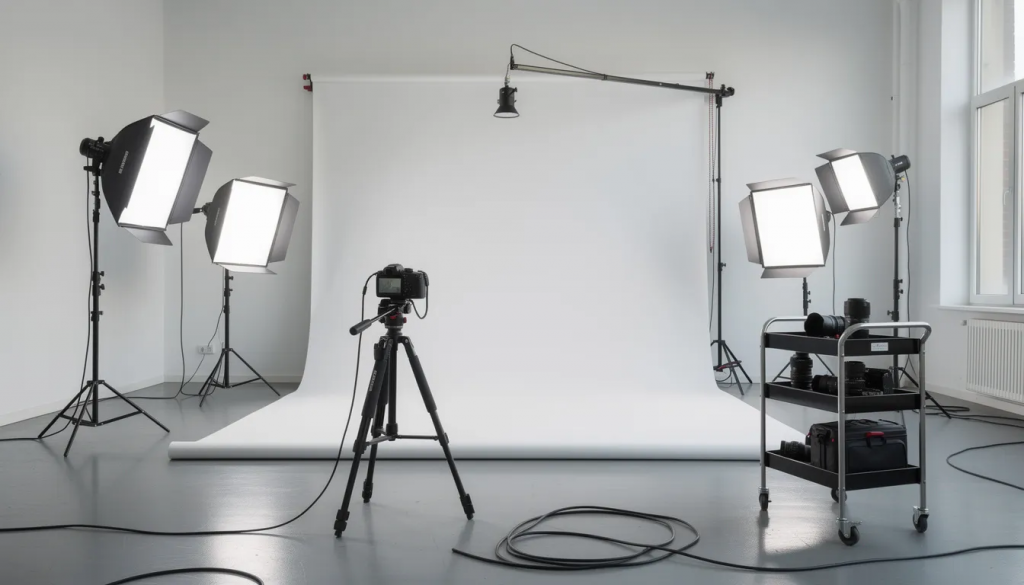
This module introduces off-camera flash and studio lighting using the professional equipment available at Melody House facilities. Understanding artificial light opens doors to studio work, event photography, and commercial assignments.
- Constant vs Strobe Lighting: LED panels and tungsten provide continuous illumination, while strobes deliver powerful bursts ideal for freezing motion and overpowering ambient light.
- The Inverse Square Law: When you double the distance between light and subject, only one-quarter of the light reaches them. This principle controls background darkness and creates dramatic fall-off.
- Flash Sync Speed: Most cameras sync around 1/200s or 1/250s. Exceeding this speed produces black bands from shutter curtains cutting across the frame.
- Practical Exercise – “The Invisible Black Background”: In a normally lit room, students use low ISO, high shutter speed, and close flash placement to render the background pitch black.
Module 8: Portraiture & Human Connection
Portraiture forms the backbone of many photography careers, from weddings to corporate headshots to fashion work. Technical skills matter, but connecting with subjects determines whether images feel alive or stiff.
- Building Rapport: Moving past the subject’s “camera mask” through conversation, clear direction, and patience. Most people relax after the first few minutes of interaction.
- Environmental Portraits: Placing subjects in their natural context tells deeper stories—a Nairobi barista in their café, a musician in the Melody House studio, or a craftsman in their workshop.
- Foreshortening Principles: Body parts closer to the lens appear larger. Understanding this affects hand placement, face angles, and overall posing decisions.
- Practical Exercise – “The Stranger Project”: Students politely approach strangers in safe public locations, gain consent, and direct three distinct emotional portraits within 5 minutes.
Module 9: Documentary, Ethics, and The Narrative
Documentary photography and photojournalism require both technical competence and ethical grounding. This module prepares students for NGO work, editorial assignments, and visual storytelling across Kenya and beyond.
- The Visual Story Arc: Establishing Shot (context), Character (subject introduction), Detail (specific elements), Interaction (relationships and action), and Closing (resolution).
- Ethical Considerations: Avoiding “poverty porn,” respecting subject dignity, understanding consent in public versus private spaces, and maintaining honesty in imagery.
- Practical Exercise – “The 10-Frame Story”: Students document a local craftsman, small business, or sporting event using exactly 10 carefully planned frames to tell a complete beginning, middle, and end.
Module 10: High-Tech Specializations
Photography branches into numerous specializations, each with unique technical demands. This module helps students explore possible niches that align with Kenya’s growing creative sectors.
- Night and Astrophotography: Long exposures, the Rule of 500 (500 ÷ focal length = maximum shutter speed before stars trail), and light painting techniques.
- Architectural Photography: Correcting keystoning (the leaning building effect) through perspective choices—essential for the growing real estate market.
- Macro Photography: Managing extremely shallow depth of field, focus stacking software, and controlled lighting for product and nature photography.
- Practical Exercise – “City Lights”: Tripod-based 30-second exposures of Nairobi traffic creating light trails while keeping buildings sharp.
Module 11: High-End Retouching in Photoshop
Fashion, beauty, and commercial photography demand polished final images. This module teaches industry standard post production techniques that separate amateur edits from professional results.
- Layer-Based Editing: Understanding Photoshop’s layer architecture and using luminosity masks for precise adjustments.
- Frequency Separation: The industry standard for skin retouching. Separating texture from color and tone for natural-looking edits.
- Dodge and Burn: Manually sculpting light and shadow to enhance three-dimensional depth in portraits and product images.
- Practical Exercise – “The Commercial Edit”: Students perform a complete magazine-style retouch of a studio portrait, including blemish removal and skin refinement.
Module 12: Business, Branding, and Professional Ethics
Technical excellence means nothing without clients. This module prepares students for real freelance and studio work in Kenya’s creative industry.
- Portfolio Building (The Rule of 10): Show only your strongest work. Curation matters more than quantity.
- Legal Essentials: Model releases, property releases, and basic copyright awareness to protect student work.
- Pricing Strategy: Calculating Cost of Doing Business (CODB)—including gear depreciation, software, and insurance—before setting fees.
- “Killing Your Darlings”: Learning to edit down a large shoot to a tight, focused selection for the client and portfolio.
Final Graduation Project: The Professional Monograph
- Core Requirement: A curated publication of 20 images unified by a clear theme or visual style (e.g., Nairobi nightlife, musicians at Melody House).
- Unified Vision: All 20 images must share a consistent color grading approach or thematic concept.
- Technical Variety: Must include at least one long exposure, one studio-lit portrait, and one candid street photograph.
- Metadata Transparency: Each image displays technical data (aperture, shutter speed, ISO) and a description of the problem solved.
- Artist Statement: A 500-word essay explaining the student’s photography philosophy and career goals.
- Presentation: Gallery-style review with instructors and invited industry guests.

Class Structure, Evaluation, and Flexibility
Melody House structures weekly lessons, assessments, and schedules to accommodate students balancing work, study, and personal commitments. The goal is making quality photography education accessible without requiring students to quit their jobs.
Typical Weekly Timetable
Approximately 3 sessions per week, each lasting 2-3 hours. Sessions combine theory presentations, live demonstrations, and field shooting around Nairobi
Continuous Assessment
Class exercises, homework assignments, and mid-course projects contribute to the final grade. This ensures students stay engaged throughout rather than cramming before finals
Sample Evaluation Breakdown
| Component | Weight |
|---|---|
| Practical Portfolio | 40% |
| Continuous Assessments (CATs) | 20% |
| Final Project & Written Reflection | 40% |
Flexible Scheduling
Morning, afternoon, and evening class slots allow working professionals to attend without schedule conflicts
Make-Up Options
Rescheduled sessions, weekend shoots, and one-on-one catch-up meetings help students who miss occasional classes stay on track
Career Paths After a Photography Course in Kenya
A strong portfolio from Melody House opens doors across Nairobi’s creative industry and beyond. Graduates find opportunities in multiple sectors, with earning potential scaling based on experience, specialization, and business skills.
Key Career Options
- Wedding and event photography
- Studio portrait photographer
- Commercial and product photographer (e-commerce, advertising)
- Photojournalist for Nation Media Group, Royal Media Services, and independent publications
- Content creator for brands and digital marketing agencies
- Real estate photography for the growing real estate market
Realistic Income Expectations (Kenyan Market)
| Experience Level | Monthly Range (Ksh) |
|---|---|
| Entry-level staff roles | 30,000 – 79,000 |
| Experienced specialists | 80,000 – 120,000+ |
| Successful freelance photographers | Variable; top earners exceed 150,000 |
Freelance Rate Insights
Many Nairobi freelance photographers charge approximately Ksh 4,000 per hour for established event photography work, depending on experience and equipment quality
Multimedia Skill Value
Combining photography and videography skills from Melody House increases earning potential, as clients increasingly seek professionals who can deliver both still images and video content
Why Choose Melody House for Photography Courses?
Melody House stands as a specialized creative institution in Nairobi with a strong focus on photography, music, and media arts. This unique positioning creates opportunities unavailable at general colleges or purely online platforms.
Working Professionals as Instructors
Faculty actively work in Kenya’s photography, film, and media industries, bringing current market insights and real client experience into the classroom
Professional Facilities
Access to studio spaces, professional lighting equipment, and collaboration opportunities with musicians and filmmakers creates diverse portfolio-building opportunities
Small Class Sizes
Personalized feedback and mentorship help students identify and develop their unique creative strengths rather than following a generic template
Career Development Support
Portfolio reviews, networking events, and guidance on branding and pricing prepare students for the job market and successful freelance careers
Integrated Creative Education
Students can explore videography courses, video editing, and music production alongside photography, building versatile creative skills valued by modern media houses
Enrollment, Fees, and Next Intakes
Starting your photography journey at Melody House begins with a simple inquiry. The admissions team provides personalized guidance to help you choose the right photography course for your goals and schedule.
Fee Information
Current 2026 fee structures are as follows:
| Course Level | Fee (Ksh) |
|---|---|
| 1-Month Workshop | 20,000 |
| 3-Month Certificate | 30,000 |
| 6-Month Diploma | 60,000 |
These are available directly from Melody House via phone, email, or campus visit at the Nairobi campus
Entry Requirements
- Genuine interest in photography and visual storytelling
- KCSE certificate preferred for diploma level enrollment
- Own camera recommended (DSLR or mirrorless), though rental options may be available
- No prior photography experience required for beginner courses
Typical Intake Periods
Intakes run on a rolling basis throughout the year. Early application is recommended due to limited spaces in each cohort
Application Process
Complete the application form online or in person, attend a brief interview or campus tour, and receive your enrollment confirmation
Ready to develop your skills, build a strong portfolio, and launch a successful career in photography? Contact Melody House today to book a campus tour, ask curriculum questions, and take the first step toward becoming a professional photographer. Your creative career starts here.
Frequently Asked Questions (FAQ)
How much does it cost to study photography in Kenya?
In 2026, photography fees in Nairobi generally fall into the following brackets:
| Course Level | Avg. Fee (Ksh) |
|---|---|
| 1-Month Intensive | 15,000 – 25,000 |
| 3-Month Certificate | 30,000 – 45,000 |
| 6-Month Diploma | 60,000 – 80,000 |
Melody House offers some of the most competitive rates, starting at Ksh 20,000 for workshops.
Which course is best in photography?
The 6-Month Diploma in Professional Photography is widely considered the best option for those pursuing a career. It provides enough time to master the “Big Three” (ISO, Aperture, Shutter Speed), professional studio lighting, and business skills required for media houses or high-end freelancing.
Which college can I study photography?
You can study photography at Melody House, which is the premier choice in Nairobi for its industry-standard studio facilities and flexible, practical-led training.
What qualifications do you need for photography?
Formal academic qualifications are usually not mandatory for certificate levels—passion and a creative eye come first. For a professional Diploma, a KCSE certificate (with a D+ or above) is preferred by most Nairobi institutions to ensure literacy in the technical aspects of the craft.
How long does a photography course take?
Course durations range from 1 month for intensive skill-specific workshops to 6 months for full professional diplomas. Part-time options are also available to accommodate working professionals.