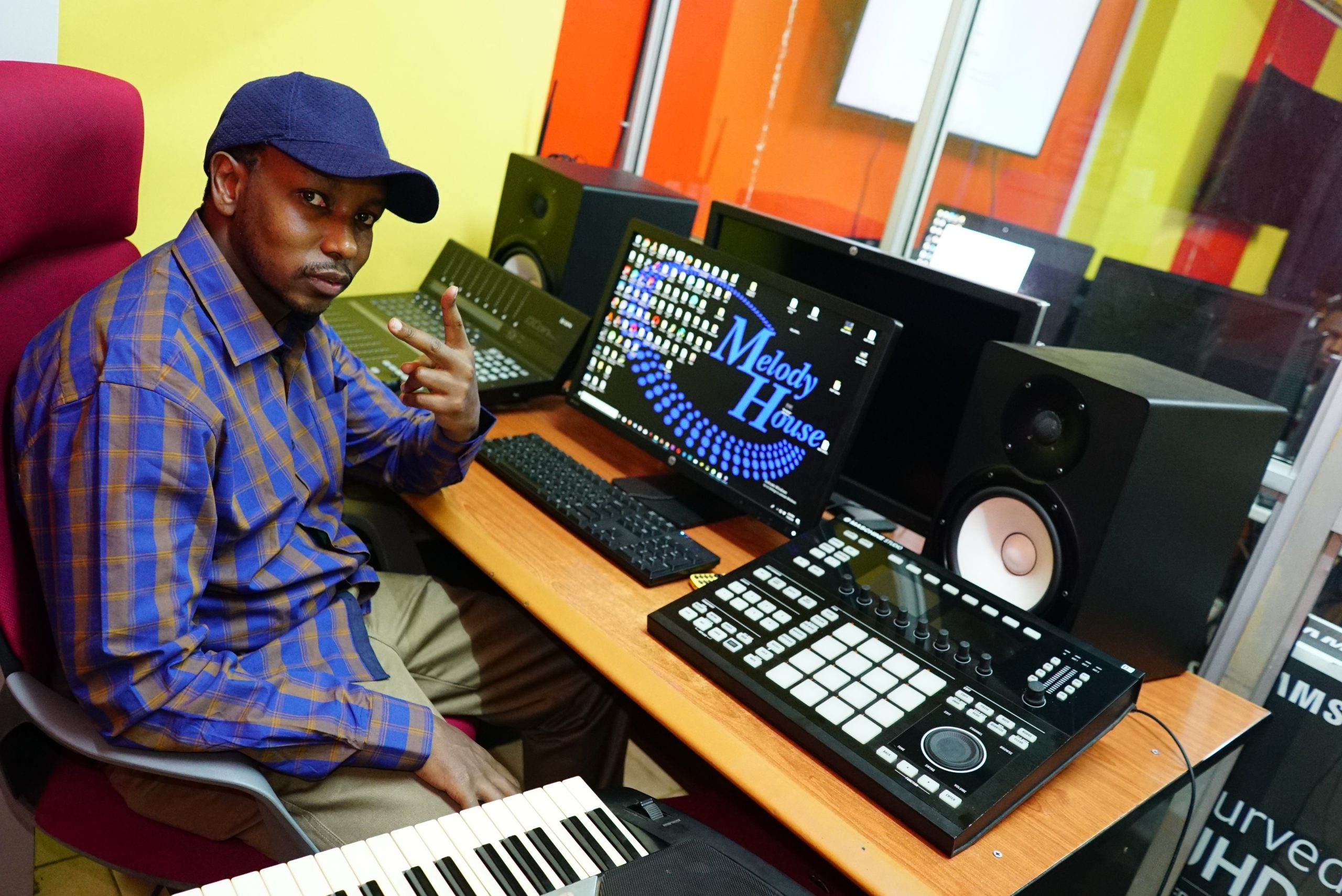
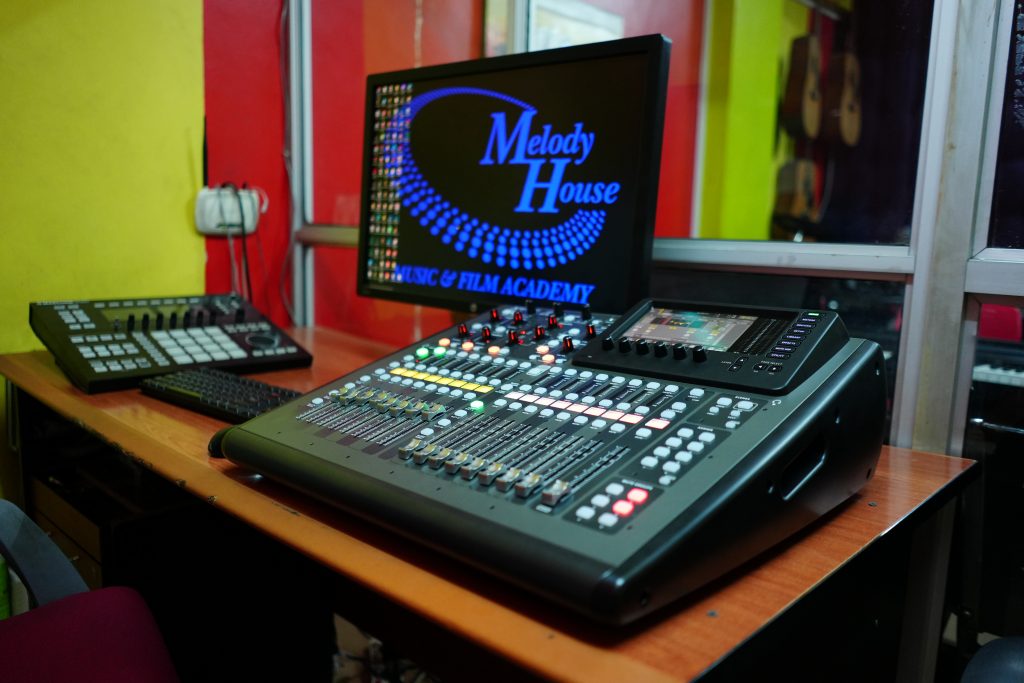
Best Sound Engineering Courses in Kenya: Join the Top Sound Engineering Schools in Nairobi
“If you are looking for the most comprehensive sound engineering courses in Kenya, Melody House offers an industry-leading curriculum designed for the 2026 audio landscape. As one of the premier sound engineering schools in Nairobi, we provide students with hands-on experience on world-class digital consoles and international Pearson BTEC certification. Whether you are a beginner or a professional looking to upscale, our sound engineering courses bridge the gap between technical theory and real-world mastery.”
Why Enroll for the Sound Engineering Course at Melody House?
In a 2026 landscape where Nairobi has become a global hub for live events, corporate summits, and immersive audio, the role of an engineer has shifted from a “support role” to a Technical Architect. While many sound engineering schools in Kenya focus on static studio recording, we prioritize the Live Signal Chain.
Here is why Melody House is consistently ranked among the best sound engineering schools in Nairobi for serious professionals:
1. Mastery of the “Live Signal Chain”
Today’s major festivals and corporate events in Kenya utilize elite gear like line arrays and networked digital consoles. Unlike other sound engineering courses that rely on outdated simulations, Melody House puts you behind the actual hardware used on global stages—including Yamaha, Allen & Heath, and DiGiCo ecosystems.
2. International Pearson BTEC Accreditation
We are proud to be one of the few sound engineering schools in Kenya to offer the Pearson BTEC Diploma. This isn’t just a local certificate; it is an internationally recognized “technical passport.” Whether you are looking for sound engineering courses in Nairobi to start a local career or aim to work on international tours in Europe or the US, your BTEC credential proves you meet global standards.
3. Solving the 2026 RF Challenge
The wireless environment in Kenya is more crowded than ever. Our curriculum includes specialized training in RF Coordination and Wireless Management. You will learn to use professional scanners to find clean frequencies for microphones and In-Ear Monitors—a skill that makes you a “must-hire” for high-stakes broadcasts and live productions.
4. Direct Industry Integration
Located in the heart of the city, we are more than just a school; we are an industry node. Students at Melody House don’t just study sound engineering in Kenya—they live it. Our “Industry Immersion” program connects you with Nairobi’s leading event production houses, ensuring that by the time you graduate, you already have a professional network and a portfolio of real-world shows.
Comparison: Why We Stand Out
| Feature | Melody House (Nairobi) | Standard Sound Engineering Courses |
| Primary Focus | Live Performance & Networked Audio | Basic Studio Recording |
| Certification | Pearson BTEC (International) | Local Internal Certificate |
| Equipment | Industry-Standard Hardware | Consumer-Grade Controllers |
| Career Path | Chief Engineer / Touring Tech | Studio Assistant |
Our Sound Engineering Program Tracks (Curriculum)
We offer three distinct tiers, allowing you to scale your education based on your career goals.
Level 1: Foundation Certificate in Live Sound
This intensive sound engineer course is the perfect starting point for those new to the field. It covers the essential building blocks of professional audio, balancing the “physics of sound” with the “art of the ear” to ensure that technical proficiency never stifles creativity. In this tier, we move from the basics of a vibrating string to the complexities of a multi-instrument stage setup.
- Duration: 3 Months
- Price: KES 40,000
- Hardware: Professional Analog Mixing Consoles, Industry-Standard Dynamic (Shure SM58/57) & Condenser (AKG/Rode) Microphones.
- Award: Melody House Foundation Certificate in Sound Engineering
1.1 The Science of the Signal & Acoustic Physics
Before touching a fader, an engineer must understand the air they are moving. This module moves from the atomic level of a sound wave to the architecture of audio signals.
- Waveform Anatomy & Math: A detailed study of Sine, Square, Sawtooth, and Triangle waves. We explore the relationship between Frequency (Pitch) and Wavelength, teaching students how to calculate the physical size of a bass wave vs. a treble wave.
- Fundamental Acoustics: Mastering the Inverse Square Law, which explains why sound pressure level (dB SPL) drops by 6dB every time you double the distance. This is critical for calculating how many speakers a church or venue needs.
- The Decibel (dB) Scale Mastery: Understanding the logarithmic nature of sound. We differentiate between dB SPL, dBu (analog voltage), and dBFS (digital full scale).
- Phase & Polarity Physics: Real-world applications of the 3:1 rule. We teach you how to identify and fix “comb filtering” caused by phase cancellation.
- Psychoacoustics & The Human Ear: Studying the Fletcher-Munson curves to understand loudness perception and the Binaural Effect.
1.2 Hardware & Signal Flow Mastery
Mastering the toolset of the trade. We follow a signal from the vibration of a singer’s vocal cords to the movement of a speaker cone.
- The Analog Chain: Deep dive into Input Gain, Inserts, Auxiliary Sends (Pre vs. Post fader), and Master Bus architecture.
- Microphone Transduction: Dynamic, Condenser, and Ribbon mics. Mastery of polar patterns (Omni vs. Super-Cardioid) to prevent feedback.
- Cables & Soldering: Physics of balanced (XLR/TRS) cables and Common Mode Rejection. Practical soldering workshop.
- Gain Staging Theory: Maintaining the “Sweet Spot” (Nominal Level) to maximize signal-to-noise ratio and avoid clipping.
1.3 Foundation Mixing: EQ & Dynamic Control
- Subtractive EQ Philosophy: Using High-Pass Filters (HPF) and Shelving EQ to clean up “mud” and rumble.
- Dynamics 101: The four pillars of compression—Threshold, Ratio, Attack, and Release.
- Gate & Expander Logic: Using Noise Gates to ensure drum mics are only “open” when hit, reducing stage bleed and cleaning up the overall mix.
Career Outcome: Junior technician for small venues, church sound teams, and assistant studio engineers.
Level 2: Advanced Certificate in Sound Engineering
A step up into the world of high-end professional digital audio. This track is designed for those seeking to bridge the gap between venue technician and touring professional.
- Duration: 6 Months
- Price: KES 40,000 Per Term (2 Terms)
- Hardware: Digital Mixing Consoles (Yamaha / Allen & Heath), Wireless RF Scanners, Digital Stage Boxes.
- Award: Melody House Advanced Certificate in Audio Engineering
2.1 Applied Acoustics & Room Treatment
In Level 2, we stop looking at the speakers and start looking at the room.
- Room Modes & Standing Waves: Using math to identify where low frequencies will “trap” and become boomy. We teach students how to calculate “Nodes” and “Antinodes” in a rectangular room.
- Acoustic Treatment Engineering: The specific use cases for porous absorbers (fiberglass/rockwool), Helmholtz resonators, and quadratic residue diffusers (QRD).
- RT60 Measurements: Learning to measure the “Reverb Time” of a hall. You will learn how to adjust your mix style based on whether a room is “wet” (stadium) or “dry” (studio).
2.2 Digital Console Architecture (Yamaha & Allen & Heath)
Moving from the analog world to the digital “cockpit.” We focus on the workflows used in 90% of the world’s mid-to-large scale events.
- The Digital Workflow: Mastering Layers, Custom Fader Banks, and “Scribble Strips.”
- Scene Management & Automation: Programming snapshots for a theatrical play or a 10-band festival. Learning “Recall Safes” to ensure certain channels (like the MC) never change while the band settings do.
- Onboard Processing: Using the built-in “Rack” effects. We dive into the Premium Racks of the Yamaha CL series, including emulations of classic Neve and UREI hardware.
- Digital Patching & I/O: Routing signals through the network (Dante/AES) rather than physical copper snakes.
2.3 Advanced Signal Processing (The Art of the Mix)
- Parallel Processing: Mastering “New York style” compression to add density to drums or vocals without destroying their natural transients.
- Side-chaining & Ducking: Advanced techniques like ducking the bass guitar whenever the kick drum hits, a staple of modern professional mixing.
- Time-Based FX Design: Designing custom Reverb and Delay presets. We teach the difference between a “Plate” (for vocals) and a “Hall” (for orchestral space) and how to use Tap Tempo to sync delays to the song’s BPM.
Career Outcome: Lead sound technician for corporate events and medium-sized live venues.
Level 3: Diploma in Sound Engineering
Our flagship program, awarded by Pearson BTEC, is the gold standard for sound engineering in East Africa. This level focuses on large-scale system engineering and the physics of massive sound reinforcement.
- Duration: 12-18 Months
- Hardware: DiGiCo SD/Quantum Series, Line Array Systems (L-Acoustics/d&b style), SMAART Measurement Software.
- Award: Pearson BTEC International Level 3 Diploma in Sound Engineering
3.1 Advanced PA System Design & Tuning
How do you provide even sound to 50,000 people? This is the science of System Teching.
- Line Array Theory: Moving from Point Source to Line Source. We study the “Fresnel” and “Fraunhofer” zones to understand how vertical speaker arrays couple together to throw sound over 100 meters.
- Predictive Software: Learning to use CAD-based software to “map” a venue and calculate exactly where every speaker should hang (Splay Angles).
- SMAART Mastery: Using measurement microphones and Dual-FFT analysis to phase-align a system. You will learn to ensure the subwoofers and main speakers are hitting the audience at the exact same millisecond.
- Subwoofer Arrays: Designing Cardioid (heart-shaped) or End-Fire sub arrays to keep the low-end energy off the stage and focused on the audience.
3.2 Networked Audio & Dante Mastery
The industry has moved from copper to IT. A modern engineer is half-audio-expert, half-network-admin.
- Dante Level 1 & 2: Learning to route 64+ channels of uncompressed audio over a single Cat6 cable.
- Network Topology: Configuring managed switches, setting up “Primary” and “Secondary” redundant networks, and managing “Latencies” in a digital system.
- Word Clock & Sync: The importance of digital clocking to prevent “clicks and pops” in a multi-device digital system.
3.3 Studio Mastery & 2026 Immersive Audio
- Dolby Atmos for Music: Mixing in a 7.1.4 environment. We teach the shift from “Channel-based” mixing to “Object-based” audio, where sounds are placed in a 3D coordinate space.
- The Mastering Chain: Professional loudness standards. Mastering for Spotify (-14 LUFS) vs. Netflix (-27 LUFS). Using Linear Phase EQ and Mid-Side (M/S) processing for final polish.
3.4 The Business of Sound
- Tour & Production Management: Reading technical riders, managing stage “Load-ins” and “Strikes,” and leading a crew of technicians.
- Industry Law: Understanding Copyright (KAMP/PRISK), performance royalties, and professional contract negotiation.
Educational Credential: Pearson BTEC Diploma.
Career Outcome: Chief Audio Engineer, Touring Systems Tech, or International Producer.
Program Comparison at a Glance
| Feature | Level 1: Foundation | Level 2: Advanced | Level 3: Diploma |
| Duration | 3 Months | 6 Months | 12 – 18 Months |
| Certification | Melody House Certificate | Melody House Advanced Cert. | Pearson BTEC (International) |
| Focus Area | Basic Signal Flow & Mixing | Digital Consoles & RF Mgmt | System Tuning & Touring Biz |
| Ideal For | Church/Small Venue Techs | Corporate & Event Engineers | Career Professionals & Touring |
| Key Tech | Analog Signal Path | Wireless Coordination | SMAART & Line Arrays |
*Note: Higher levels include all content from the preceding levels.
MEET THE FACULTY
Learn from the technical architects who dominate the Kenyan live sound and recording industry in 2026.
Lead Instructor: Marcos Musalanu
- Specialization: Live Systems Engineering & PA Tuning
- Experience: 6+ years managing audio for the Blankets & Wine Festival and major KICC summits. Expert in SMAART room calibration.
- “A great engineer doesn’t just mix sound; they manage the physics of the entire room.”
Senior Mentor: Daniel Furaha
- Specialization: Studio Signal Flow & Pearson BTEC Standards
- Experience: Lead producer at SFP Productions with deep expertise in both analog tracking and advanced digital mastering.
- “Understanding the signal path is the first step toward creative freedom in the studio.”
GRADUATE SUCCESS STORIES
Our alumni define the professional standards for sound engineering schools in Kenya.
Featured Alumni: Deejay Carbon (Live Audio Lead), Stella Katiwa, DJ Fabian 254 (Event Tech), and Wambui Ngugi (Studio Engineer).
Alumni Achievement: Deejay Carbon
While widely known for his broadcast work, Carbon’s mastery of live signal flow began with the technical sound engineering courses in Kenya offered at Melody House. He now leads technical audio teams for major corporate activations.
Student Testimonial: Ezra J.
“I spent weeks comparing sound engineering schools in Nairobi. The 1-on-1 time with the DiGiCo consoles and the focus on the 180-degree rule of sound at Melody House gave me the confidence to handle international technical riders.”
Student Testimonial: Jane W.
“What makes this one of the best sound engineering schools in Kenya is the focus on RF management. I learned how to coordinate wireless frequencies in a crowded Nairobi spectrum, which landed me a job at a top-tier broadcast house.”
Join the Industry Leaders
Ready to master the science of sound? Our 2026 intake is now open at Information House. Secure your spot in the most practical sound engineering courses in Nairobi and start your journey today.
Sound Engineering Frequently Asked Questions
What should I study to become a Sound Engineer?
To build a solid foundation, you should focus on Acoustic Physics, Signal Flow, and Digital Audio Workstations (DAWs) like Pro Tools or Ableton Live. Aspiring professionals in sound engineering schools in Nairobi should prioritize Live Sound Reinforcement, Studio Recording, and RF Management to stay competitive in the modern industry.
What grade is required to study engineering in KCSE?
The KCSE grade requirements depend on the level of study. For a Bachelor’s Degree, a C+ (Plus) is typically required. However, many sound engineering colleges in Kenya offer Diploma tracks starting at a C- (Minus) or D+, and Certificate courses starting at a D (Plain). Foundation courses often prioritize passion and aptitude over traditional grades.
What qualifications do you need to become a Sound Engineer?
Beyond academic papers, you need Technical Ear Training and Equipment Mastery. Leading sound engineering schools in Kenya emphasize the importance of Hands-on Training with Analog and Digital Mixers. Holding a Professional Certification like a Pearson BTEC Level 3 Diploma ensures you meet international technical standards.
Which college is best for sound engineering?
Melody House is the premier choice for sound engineering in Kenya. It stands out as a specialized Pearson BTEC center, offering globally recognized diplomas. It is currently the only institution where students train on elite hardware like DiGiCo consoles, Line Array Systems, and professional system design software like SMAART.
Can I become a sound engineer without a degree?
Yes, you can become a sound engineer without a degree. This is a skills-based field where a strong portfolio and practical experience are often valued over a four-year university degree. Many professionals choose intensive Certificate or Diploma courses to gain the necessary technical skills and industry connections in a shorter timeframe.
Would you like me to help you create a downloadable PDF version of this curriculum or a registration form for interested students?
HAVE A QUESTION ABOUT ENROLLMENT?
EXPAND YOUR SKILLSET
Explore complementary professional tracks at Melody House.
View Related Professional Courses
- DJ Academy Kenya Master the decks with Kenya’s leading DJ school. Ideal for sound engineers looking to cross-train in performance and live mixing. View DJ Courses →
- Music Production Courses Take your sound from the stage to the studio. Learn professional DAW workflows, composition, and international mastering standards. Explore Production →